
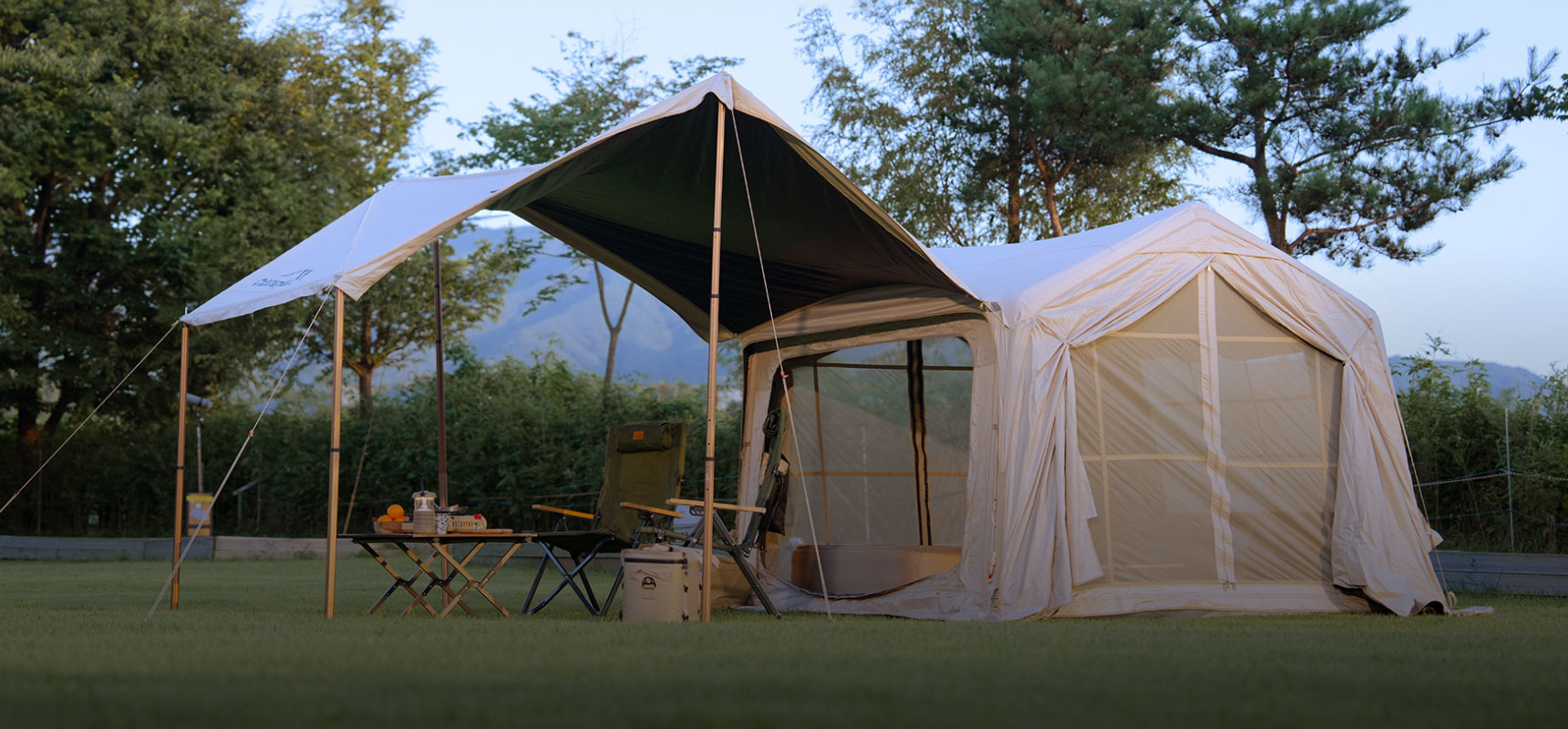
Cotton vs Polyester Tents: Why Condensation Happens and How to Manage It
Condensation is one of the most common things campers notice inside a tent. Understanding how different tent materials behave can help you create a more comfortable camping environment.
Cotton vs Polyester Tents
Each material has different strengths and trade-offs.
Cotton Tents
- Highly breathable
- Generally cooler inside
- Produces less condensation
- Lower waterproof performance than polyester
- Best used with a tarp during heavy rain
Cotton fabric allows more airflow through the material, helping moisture escape and creating a more comfortable interior environment.
Polyester Tents
- Higher water resistance
- Works well with seam-sealing tape
- Lower breathability
- Can feel warmer inside
- Requires good ventilation to manage condensation
Polyester provides strong resistance to rain, but because moisture escapes less easily, condensation may form more readily inside the tent.
What Is Seasoning?
Cotton tents may allow a light mist through the fabric when new or when heavily exposed to water. Seasoning is the process of wetting and fully drying the cotton fabric several times.
As the cotton fibres swell and tighten, the fabric can become more resistant to water penetration. Always allow the tent to dry completely before storing it.
What Is Condensation?
Condensation happens when warm, humid air meets a colder surface.
When Is Condensation More Likely?
Humid Campsites
Valleys, beaches, rivers, forests and other humid locations can increase moisture levels around the tent.
Large Temperature Changes
Condensation often appears overnight, at dawn or during cool, cloudy and rainy conditions.
Poor Ventilation
Moisture builds up faster when windows, doors and ventilation openings remain completely closed.
Moist Ground
Moisture rising from grass and soil can contribute to humidity inside tents and underneath tarps.
How to Minimise Condensation
Improve Ventilation
Open windows, doors and tent vents regularly to allow humid air to escape.
Keep Air Moving
A portable fan can help improve circulation inside the tent.
Use a Tarp Above the Tent
Pitch the tarp separately above the tent and leave space between the two layers so air can circulate.
Use a Groundsheet
A groundsheet can help reduce moisture rising from the ground.
Choose the Campsite Carefully
Where possible, avoid very damp, low-lying or poorly ventilated areas.
Use an Inner Liner
An inner liner can help prevent condensation droplets from falling directly into the living space.
What About Water Soaking?
Water soaking happens when tent fabric absorbs moisture after extended exposure to rain, dew or condensation.
How to Reduce Water Soaking
- Use a separately pitched tarp above the tent during extended rain.
- Allow airflow between the tarp and the tent fabric.
- After camping in wet or humid conditions, dry the tent completely before storage.
- Never store the tent while the fabric is still damp.
Enjoy a More Comfortable Camping Experience
Understanding ventilation, moisture and tent materials can help you get the best performance from your camping setup.
SHOP COODY TENTS